
According to a report from the National Employment Law Project released this week, most of the jobs added during the recovery from the Great Recession have been low-wage jobs, even though the majority of those lost were middle-wage jobs.
According to the report, the fastest growing occupations between the first quarter of 2010 and the first quarter of this year were retail sales and food preparation. While the average hourly wage for retail is 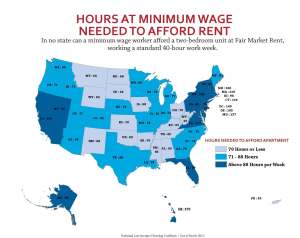 $10.97, and the average hourly wage for food prep is $9.04, the Housing Wage- the amount a household must earn, working full time, to afford rent and utilities on a modest 2-bedroom apartment- is $18.25. As our report, Out of Reach 2012: America’s Forgotten Housing Crisis, demonstrated, those low wages are simply not enough to cover the cost of housing without scrimping on basic necessities like food and medicine.
The New York Times story on the report also mentions the ongoing polarization of the U.S. labor market, wherein job growth happens in both highly specialized-and high-paying- technical fields, and in low-paying, low-skilled jobs like the low-wage jobs cited in the NELP study. If this trend continues, it will mean an ever-growing gap between those who can easily afford housing, and those who can barely keep a roof overhead.
How do you think we can solve the housing problems of these low-wage workers? Is there a way to put a stop to the polarization of the labor market? What have you heard the presidential candidates, or other candidates for elected office in your community, say about these issues? Let’s talk about it in the comments.


 On the Home Front
Leave a reply to News Round-Up: Sacred Cows | On the Home Front Cancel reply