
The Greater New Orleans Housing Alliance (GNOHA), a 2025 organizing awards nominee, is recognized for its work to pass a charter amendment that establishes and funds a local Housing Trust Fund.
For decades, the city of New Orleans had a property tax millage to support a modest neighborhood housing improvement fund. However, the mayor’s office controlled the funds, and spending decisions were opaque. Frustrated with the lack of transparency, voters narrowly rejected a measure in 2021 to renew the property tax millage, which left the housing fund without resources.
Following the defeat of the property tax milage renewal, housing advocates began exploring opportunities to bring the trust fund back. Organizers did not aim to convince voters to change their mind about a policy that had not delivered for their communities in the past. Rather, they sought to understand voters’ perspectives and craft new policy solutions accordingly. With funding from national partner organizations (PolicyLink and Race Forward) to do narrative change work, HousingNOLA, an NLIHC state partner, started holding focus groups with residents. The focus groups revealed significant distrust in the mayor and the city council, and strong opposition to enacting another millage.
In its advocacy for a new housing trust fund, HousingNOLA and its coalition partners emphasized to the Council that a one-time investment was not enough: to meet the city’s housing needs, the trust fund would need annual dedicated revenues, which could only be enacted by a charter amendment. Thanks to steadfast advocacy, the Council put forward a charter amendment proposal with strong provisions for transparency and accountability – one that would allocate approximately $17 million annually and in perpetuity.
The Greater New Orleans Housing Alliance (GNOHA), the 501c4 affiliate of HousingNOLA, coordinated the campaign for the trust fund. In a presidential election year with high voter turnout, the coalition prioritized outreach to voters who are less likely to be reached by traditional political campaigns. Although New Orleans is a majority-renter city, voter outreach tends to concentrate on homeowners, given their higher voter turnout rates. To counter this imbalance, the campaign made approximately 18,000 phone calls to renters in multifamily housing. The campaign, leveraging years of relationship-building, texted tens of thousands of people who had signed up for GNOHA’s #PutHousingFirst campaign.
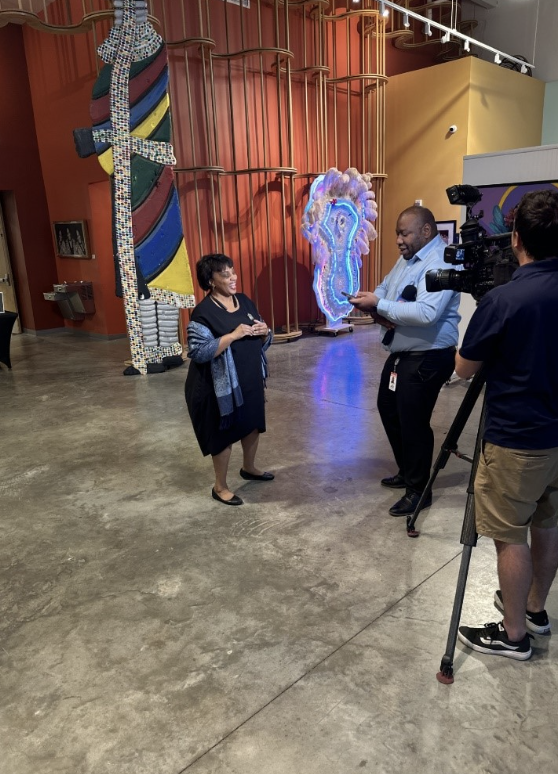
The campaign received support from a wide range of partners. Dozens of nonprofit housing developers, civic organizations, and local elected officials played a prominent role in the campaign. Ashé Cultural Arts Center, a cultural institution dedicated to celebrating the African diaspora, held several kickoff events and mobilized young leaders. Social justice organizations shared messaging about the trust fund in their door-knocking efforts, and neighborhood-based civic groups sent out mailers. National partners who funded the narrative work joined partners like Bridge to Power in weekly coalition calls to support the organizers and overall coalition efforts. Although the campaign did not have funding for conventional TV ads in the expensive New Orleans media market, the campaign placed ads on radio, streaming, online, and on social media.
While the campaign knew that it could not flip its staunchest opponents, organizers focused on reaching constituencies who wanted and themselves needed the city’s housing crisis to end, but still had concerns about the trust fund. Some voters were skeptical of the permanent 2% allocation of the city’s budget to the trust fund, fearing it could limit resources for other urgent needs. Other voters questioned why the measure had such strong support from developers: was the trust fund just a giveaway to them? Lack of trust in the mayor and the city council, given their past failures to steward housing funds effectively, was also a recurring theme.
Campaign organizers engaged thoughtfully with voters to respond to these concerns with three tested messages that educated and activated voters. First, they emphasized the guardrails and accountability mechanisms baked into the charter amendment. While some developers would receive Housing Trust Fund dollars, no funding was guaranteed for any individual developer. Funding allocations would be made transparently, with robust input from an advisory committee and the public. Every flyer, ad, and commentary highlighted the fact that this was not a new tax – a key concern that emerged in every focus group.
From its early focus groups to Election Day, sustained and challenging dialogue with voters fueled the campaign. “While people are aware that the housing system isn’t working because they live in it, most people don’t know why,” reflected Andreanecia Morris, executive director of HousingNOLA and president/chairwoman of GNOHA. “While highly engaged residents, developers, and community organizations are aware of the need for public investment in affordable homes, if you’re only talking to people who are comfortable articulating that need, you are missing the bulk of the voters.” To be successful, organizers sought out every opportunity for outreach, engagement, and dialogue – such as speaking at local churches, doing Q&As at community forums, commenting on news stories, doing podcasts and radio shows, and writing op-eds.
The campaign’s emphasis on accountability proved successful. While voters narrowly rejected the housing millage in 2021, the charter amendment in 2024 won by a 50-point margin! Voters sent a clear message that they want their elected leaders to prioritize local spending on housing and keep as many people as possible stably housed.
As New Orleans housing advocates celebrate their landmark victory, they remain engaged with the ongoing work to hold elected officials accountable and ensure the hard-won funds are wisely invested in the community. Join NLIHC in congratulating GNOHA and its allies on a major organizing victory!
About the NLIHC Organizing Awards
NLIHC’s annual Organizing Awards recognize outstanding achievements in statewide, regional, citywide, neighborhood, or resident organizing that further NLIHC’s mission of ensuring that people with the lowest incomes have quality homes that are accessible and affordable in communities of their choice. On the Home Front will highlight the victories of organizing award nominees throughout February and March. The winners will be announced the week prior to NLIHC’s 2025 Housing Policy Forum, where they will participate in a plenary discussion.


 On the Home Front
Leave a comment